
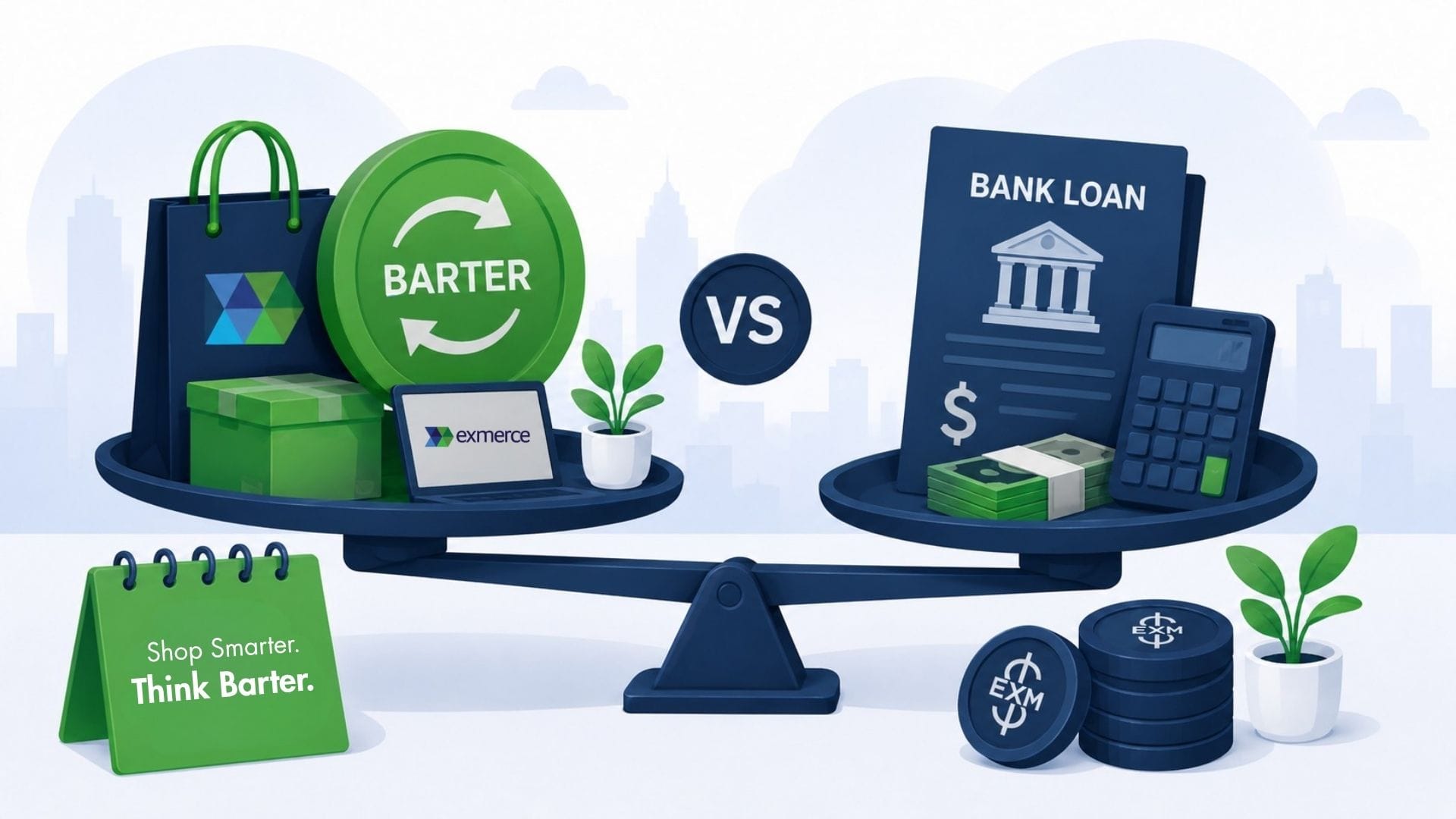
When a growing business needs more marketing, more supplies, or more capacity, the default move is usually the same: apply for a loan or draw on a line of credit. It’s familiar, and for some situations, it’s the right call. But it’s not the only way to fund growth — and it’s rarely the cheapest.
Trade through a barter exchange is an alternative financing tool that more Alberta business owners are using alongside, or instead of, traditional credit. Here’s how the two actually compare.
The Core Difference
A bank loan gives you cash today in exchange for repaying more than you borrowed, over time, with interest. Trade credit gives you purchasing power today in exchange for goods or services you provide to other businesses — no interest, no repayment schedule, no debt on your balance sheet.
They solve similar problems — you need resources now that you don’t have the cash for — through fundamentally different mechanisms.
Comparing the Two
Cost A bank loan comes with interest, and depending on your credit profile and the lender, that cost can be significant over the life of the loan. Trade credit has no interest. You earn it by selling your own products or services at their normal value, and you spend it dollar-for-dollar within the exchange. The only ongoing cost is a membership fee and a small commission on transactions — a fraction of typical borrowing costs.
Approval and Timing Loan approval depends on credit history, financial statements, collateral, and often weeks of underwriting. Joining a trade exchange is a much faster process — a conversation with a broker about your business and what you offer, and you can be trading soon after. There’s no approval process based on your credit score.
Repayment Pressure A loan creates an obligation: fixed payments, due on schedule, regardless of how your revenue is trending that month. Trade credit doesn’t work that way. You earn it by making sales, and you spend it when you choose. There’s no repayment schedule hanging over your cash flow.
What You’re Risking Loans often require collateral or personal guarantees, putting business or personal assets on the line if things don’t go as planned. Trade exchange membership doesn’t carry that kind of risk — you’re not borrowing against anything, so there’s nothing to lose if a slow month happens.
Flexibility Loan proceeds can be used broadly, which is one advantage of cash. But trade credit is more flexible than most people expect — within an active exchange, you can typically spend it on everything from professional services and marketing to event space, inventory, and even personal purchases like dining or dental care, depending on your network’s member mix.
Impact on Your Books A loan adds a liability to your balance sheet. Trade activity is generally treated as regular business income and expense — you’ll want your bookkeeper or accountant involved either way, but it doesn’t carry the same debt-load implications.
When a Loan Still Makes Sense
Barter isn’t a replacement for every financing need. Large capital expenditures — buying property, major equipment, or funding a big expansion — often require more cash than any trade network can realistically provide, and a loan or line of credit may be the right tool. The two aren’t mutually exclusive; many businesses use trade to cover operational and marketing needs while reserving traditional financing for bigger capital decisions.
The Cash-Conscious Takeaway
For the everyday costs that add up — marketing, supplies, professional services, employee perks — trade credit lets growing businesses get what they need without adding debt or interest to the equation. It won’t replace every kind of financing, but for a meaningful slice of your operating budget, it’s worth having in the mix.
Curious what this could look like for your business? Book a free consultation to talk through your specific growth plans and cash flow goals.